

PRODUCT CENTER
CONTACT US
If you are interested in cooperation, please contact us immediately, we will give you feedback as soon as possible!
Mobile

Monel K-500 is a precipitation-hardenable nickel-copper alloy, which consolidates the excellent corrosion resistance of Monel 400 and has more noteworthy strength and hardness. These strengthening properties, strength and hardness are obtained by the addition of aluminum and titanium in the nickel-copper matrix, and by a heat treatment for shock precipitation, commonly referred to as age hardening or aging. In the age-hardened condition, Monel K-500 have a more pronounced tendency to stress corrosion cracking with less than Monel 400. Alloy K-500 has approximately three times the yield strength and twice the tensile strength as compared to Alloy 400.
View more+
The alloy 200 is a forged, economically pure nickel with a carbon content of 0.15 percent. This alloy has extremely tough mechanical properties over a wide temperature range. It has corrosion resistance at neutral to moderately reduced conditions. The nickel 200 is ferromagnetic. Compared with nickel-based alloys, low-alloy and stainless steel, it has high thermal and electrical conductivity. Nickel 200 is not recommended for processes above 600 °F(316°C) because its long-term exposure in the 800 °F to 1200 °F range can cause precipitation of carbonaceous phases and loss of ductility.
View more+
The alloy 201 is a forged, economically pure nickel with a carbon content of 0.02 percent. This has extremely tough mechanical properties over a wide temperature range. It has corrosion resistance at neutral to moderately reduced conditions. The nickel 201 is ferromagnetic. Compared with nickel-based alloys, stainless steels and low alloys, it has high thermal and electrical conductivity. Due to the low carbon content of nickel 201 (up to 0.02%), nickel 201 may be considered in processes above 600 °F(316°C), and alloy 200 with higher carbon content are not recommended.
View more+
Grade 2 titanium is one of the important titanium grades used in condenser pipes, heat exchangers, offshore oil installation water pipelines, and paper industry bleaching plants. This grade can be used for parts requiring strength up to 400 °F and oxidation resistance up to 600 °F. Grade 2 titanium is commercially pure titanium, which is slightly stronger than grade 1 titanium, but has equivalent corrosion resistance for most applications.
View more+
Titanium Alloy Grade 5 Ti 6Al-4V Plate
Grade 5 titanium is commonly used worldwide and in oil fields. The availability of alpha-beta grades is great, and titanium grades are heavily used. Titanium Grade 5 is alloyed titanium and is treated as an alpha-beta alloy. Grade 5 titanium is alloyed with 6% aluminum and 4% vanadium, also known as Ti 6Al-4V.
View more+
Grade 9 titanium alloy is a low-alloyed near-alpha titanium alloy with a nominal composition of Ti-3Al-2.5V. It is used for the application and development of cold-worked pipes. It has good cold formability and welding performance, and its room temperature strength is 20% higher than that of industrial pure titanium.% ~ 50%, it has good corrosion resistance in a variety of media. Gr9 alloy has better welding performance and cold forming performance than TC4 alloy.
View more+
Hot dip galvanizing is to make the molten metal react with the iron substrate to produce an alloy layer, so that the substrate and the coating are combined. Hot galvanizing is to pickle the steel and iron parts first. In order to remove the iron oxide on the surface of the steel and iron parts, after pickling, it is cleaned by ammonium chloride or zinc chloride aqueous solution or ammonium chloride and zinc chloride mixed aqueous solution tank, and then sent into the hot dip plating tank. Hot-dip galvanizing has the advantages of uniform coating, strong adhesion and long service life.
View more+
Galvanized steel is a type of steel that is coated with zinc for protection by an electroplating process. The galvanized layer is applied to cold rolled steel at low temperatures. So EG steel is also known as cold galvanized steel. Through electrolytic galvanizing, a uniform and dense zinc layer is finally formed on the surface of the steel, but the mechanical properties of the material are still maintained. Electrogalvanized steel is usually sold in coil or sheet form. EG coil is a kind of material that can be cut, slitted and profiled for other purposes.
View more+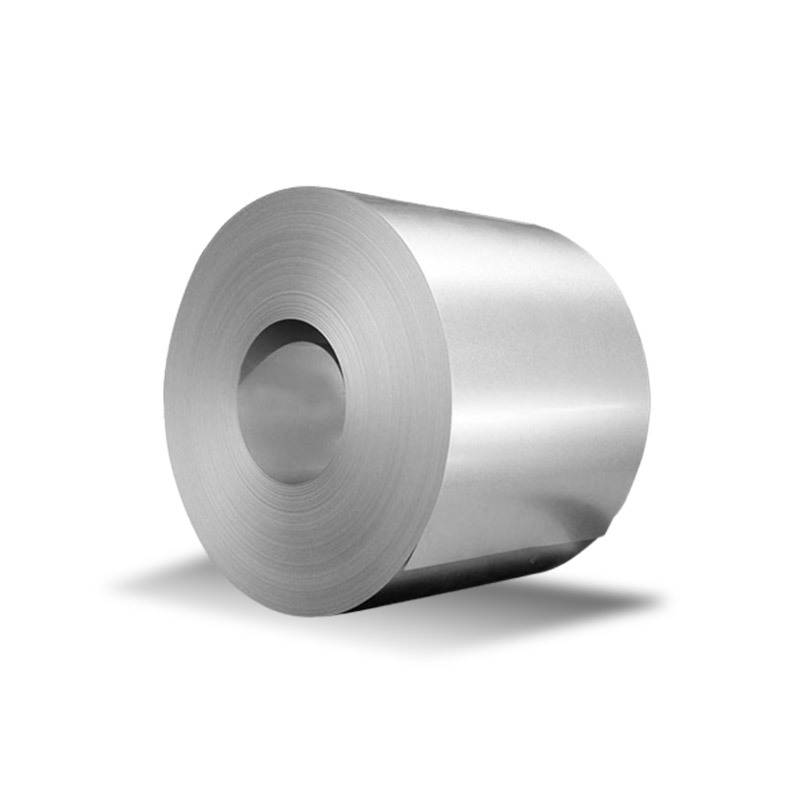
Prepainted Galvanized Steel Coil
When steel components are used to make more complex finished products, they can be galvanized before the product is assembled. This is called pre-galvanizing, or "pre-galvanizing". It may also be referred to as "in-line", "continuous" or "rolled" galvanizing. Essentially, steel components (such as sheets or wires) are galvanized using an automated process before they are cut to size.
View more+CONTACT US
Tel : +86 19706422880
E-mail : sales002@hbis-group.com
WhatsApp : +86 19706422880

GET A FREE QUOTE
Copyright : Wugang Steel Group Co., Ltd